■ Product review · Hume Band 2.0 · Updated August 2026
Hume Band 2.0 review: your sleep and recovery, read continuously.
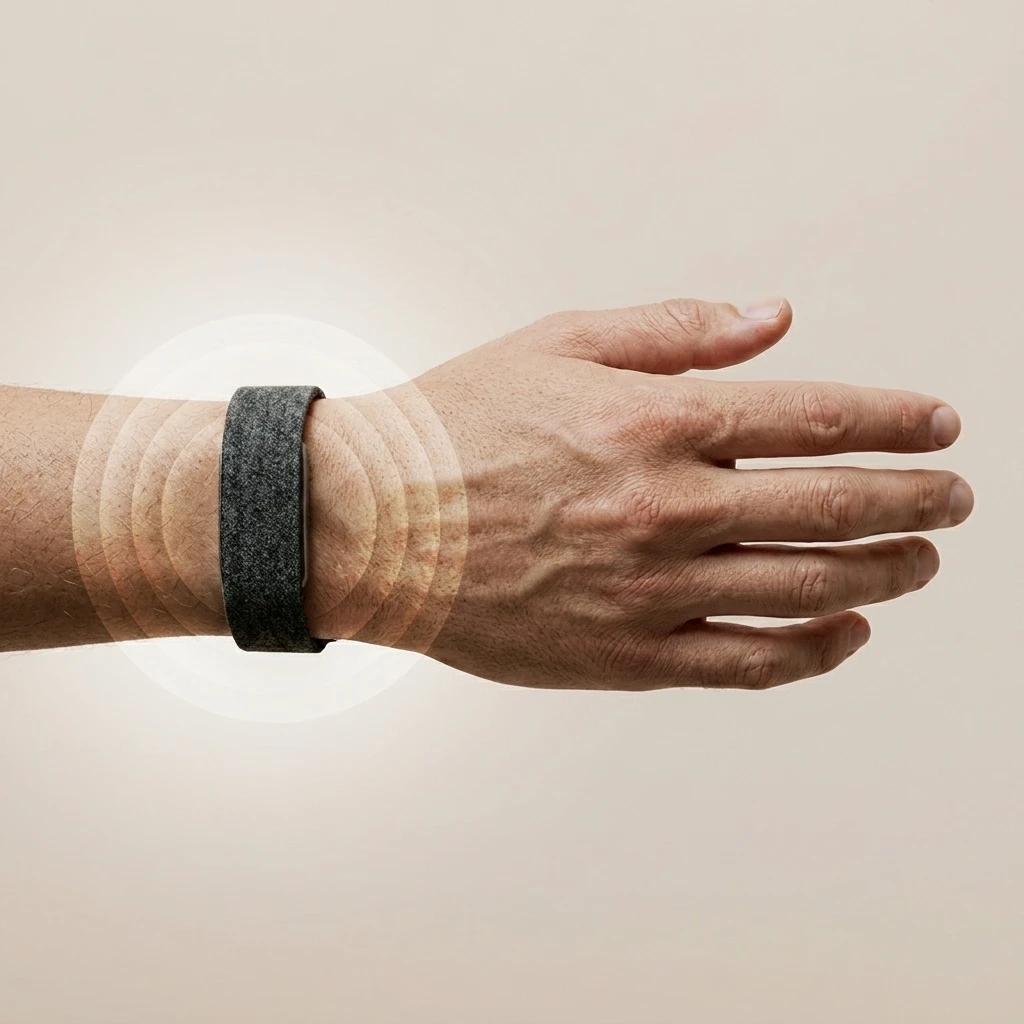
A screenless wrist band that records heart rate, HRV, blood oxygen, respiratory rate, skin temperature and movement around the clock, then turns them into sleep, recovery and strain scores in a free app. Hume publishes up to 14 days per charge, and you have 45 days to send it back.
■ Our verdict
Recommended: it asks almost nothing of you, and it keeps recording anyway.
- Nothing to log. No workout button, no screen, no notifications. You wear it and it works the rest out from the signal.
- Up to 14 days per charge, as published. Fewer nights off your wrist means fewer gaps in the record.
- One payment. $183 once, and Hume states no membership is required to use the band or read your raw data.
- 45 days to change your mind. Hume states a full refund even on opened, worn units — long enough to get through calibration first.
Takes you to humehealth.com, the manufacturer's own store — not a marketplace listing. We may earn a commission on a purchase made there, at no extra cost to you.
■ Quick verdict
Four numbers that decide it
Taken from Hume's own published specifications. Where a figure could not be confirmed, it is marked rather than estimated.
Hume publishes "up to 14 days" per charge, against roughly a week for the first-generation band. That is a manufacturer figure, not a measurement of ours, and real life shortens it.
Heart rate, HRV, SpO₂, respiratory rate, skin temperature, movement, sleep stages, sleep efficiency, strain and recovery — all without you pressing anything.
Full refund within 45 days of receipt, even on used and opened units. Return shipping is at your cost.
A one-time purchase, as Hume publishes it. Nothing recurring is required to use the band or read your raw data.
■ How we reviewed this
Notes and Tests is written by M. Cataneo. This is a documentation review rather than a wear test. Every specification, price, shipping and return term on this page was read from the manufacturer's own published pages in August 2026. Nothing here is a measurement we took ourselves, and nothing here is medical advice.
Spot something out of date? Send a source to matheuscataneo@gmail.com and it gets fixed or removed.
■ The device
What the Hume Band 2.0 is
The Hume Band 2.0 is a screenless fabric band worn on the wrist. It records your body's signals continuously, including heart rate, heart-rate variability, blood oxygen, respiratory rate, skin temperature and movement, then sends them to a free phone app that turns them into sleep, recovery and strain scores. It is the second generation of the band, and the headline hardware change is battery: Hume publishes "up to 14 days" per charge, against roughly a week for the first generation.
It is not a smartwatch, and that is the point of it. There is no display, no notifications, no GPS, no payments, and nothing to press. There is also no workout button, so you never tell it you went running — it works that out from the signal. The entire interaction is: wear it, and open the app when you feel like it.
The commercial shape of the product is just as simple. You buy the band once, at $183 as Hume publishes it, and Hume states that no subscription is required to use the band or read your raw data, and that the data is yours and exportable. An optional Premium tier at $8.99 a month adds AI coaching on top for people who want conclusions rather than numbers.
■ The mechanism
How it works
Four things happen, in this order, and only the first one asks anything of you.
-
Pair it once, then stop touching it
Install the free app, pair over Bluetooth Low Energy, enter your basics. There is no workout button and nothing to log. It needs iOS 14 or later on an iPhone 8 or newer, or Android 8.0 and above. Firmware updates arrive through the app.
-
Sensors sample continuously while you wear it
Five LEDs and four photodiodes on the underside read your pulse and blood-oxygen signal, and motion and temperature sensors fill in the rest. Hume says the array samples more often than most wearables. It is IP68 rated to 1 metre for up to 2 hours, so showers and short swims are fine and the band stays on.
-
The first weeks build your baseline
Every device in this category needs a personal baseline before its scores mean anything. Expect a few weeks of continuous wear before "low recovery" carries information. The 45-day return window is, conveniently, long enough to get through that period and still change your mind.
-
You read trends, and the history stays yours
The value is the trend line across weeks. Hume says the data is yours and exportable, and that no membership is required to read it — so the record you build keeps accumulating for as long as you keep wearing the band.
■ The read-out
What you actually read
Two layers worth separating: the signals the sensors record, and the composite scores Hume computes from them.
■ Recorded signals
- Continuous heart rate
- HRV
- SpO₂
- Respiratory rate
- Sleep stages
- Sleep efficiency
- Activity & movement
- Strain
- Recovery
- Skin temperature
■ Scores Hume computes and names
These are Hume's own product names for numbers its app calculates — not medical measurements, not clinical indicators, and not something the sensors read directly. We list them because they are what you will see in the app, not as evidence that they mean what their names suggest.
- Metabolic Capacity
- Metabolic Momentum
- Health Score
- Heart Resilience
- Biological Age
- Pace of Aging
- Longevity Index
The recorded signals are the substance of the product. They are measurements, and they are what the band is for. The composite scores sit on top of them: Biological Age, Pace of Aging, Longevity Index. Those come from a model Hume does not publish, and a name like "Longevity Index" is marketing, not biology — nothing here tells you how long you will live, and no reading from this band means you are healthy or unhealthy. Read them as a relative trend against your own baseline, which is the only thing they are good for. The band records and reports. It is a consumer wellness device, not a medical device: it does not diagnose, treat, cure or prevent anything, and it is not a substitute for a clinician.
■ The case for it
What it actually does for you
Six things the band gives you, each one traceable to a published specification or term.
It disappears while it works
- No screen and no notifications. If the reason you abandoned a smartwatch was the buzzing, the absence of it here is a deliberate design decision in your favor.
- No workout button and nothing to log. Activity is inferred from the signal, so the record does not depend on you remembering to start it.
- An adjustable fabric band fits any hand and stays on through grip work and the gym.
A record worth reading
- Ten signal streams for one price: continuous heart rate, HRV, SpO₂, respiratory rate, skin temperature, movement, sleep stages, sleep efficiency, strain and recovery.
- Up to 14 days per charge, by Hume's published figure, so the band spends its time on your wrist rather than on a charger — and nights, the half of the day you cannot observe any other way, stay in the record.
- One payment and a free app. Hume states no membership is required to use the band or read your raw data, and that the data is yours and exportable.
Most trackers count what you did: steps, active minutes, rings closed. That is a record of your intentions. What it cannot tell you is how the body actually responded, or why one week of the same training felt fine and the next one felt like wading through mud, or why two nights with identical hours in bed produced completely different mornings.
Continuous heart rate, HRV, respiratory rate, skin temperature and sleep staging describe the response rather than the activity. On their own, for a single day, they are noise. HRV moves with a late coffee, a hard session, a bad argument, a warm room. Across six weeks against your own baseline, the same numbers become the only feedback loop most people ever get on whether the changes they are making are landing. That is what this band is built to collect, and it collects it without being asked.
■ The headline spec
Up to 14 days on a charge
Hume publishes "up to 14 days" per charge for the 2.0, against roughly a week for the first-generation band, with a full charge listed at 20 to 80 minutes depending on how low it is. Treat that as the maker's figure rather than a guarantee: "up to" is doing work in the sentence, continuous tracking and frequent syncing shorten it, and we did not measure it ourselves.
It still matters more than it sounds like it should. A device you have to charge often is a device with holes in the record, and the holes tend to fall at night, because night is when you are not looking at it. A charge interval measured in weeks rather than days means the band is on your wrist for the sleep, which is the part of the day it reads best, and it means the trend line across months is continuous instead of dotted.
Charging twice a month, not twice a week.
■ Generation two
What actually changed
Three differences you can use from the first day, and one thing that stayed exactly as it was.
-
Battery
Hume publishes "up to 14 days" on a single charge, against roughly a week for the first-generation band. Treat it as the maker's figure rather than a guarantee: continuous tracking and frequent syncing shorten it, and we did not measure it ourselves. A full charge is listed at 20 to 80 minutes depending on how low it is.
-
Accuracy
Better signal processing against the same sensor array of 5 LEDs and 4 photodiodes, which Hume says samples more often than most wearables. Hume describes the accuracy as validated in lab studies and third-party testing.
-
Comfort
A redesigned band for all-day wear, adjustable across a wide range of wrist sizes. Strap comfort is the most common complaint about 24/7 wearables generally, so this is a fix worth having rather than a feature.
-
Unchanged, and fine
IP68 dust and water resistance, rated to 1 metre for up to 2 hours, so showers and short swims are covered. Bluetooth Low Energy, firmware updates through the app, FCC certified, airplane mode supported.
■ The decision
Who it's for
Three readers, three verdicts. Find the one that sounds like you.
You sleep badly and want to know why
Some mornings work and some do not, and you would like the difference written down instead of guessed at.
- Sleep stages and sleep efficiency, nightly
- Stays on the wrist because it rarely needs charging
- Nothing to press before bed
Verdict: the clearest buy on this page.
You train, and you want the recovery read
You are deciding between a hard session and a rest day, and you would rather decide on HRV and sleep than on how you feel at 6am.
- Strain and recovery scores, no workout logging
- A fabric band survives grip work and stays put
- Give it three to four weeks to build your baseline
Verdict: buy it, and give it the full calibration period.
You just want the long view
No training plan, no interest in dashboards. You want a quiet record of how sleep and recovery are trending across months, and to be left alone the rest of the time.
- No screen, no notifications, nothing to log
- Charge it twice a month and forget it
- A once-a-week glance at the app is enough
Verdict: a good fit, and a considered purchase rather than an impulse one.
Buy it if
- You want sleep and recovery numbers recorded continuously, without having to start or stop anything.
- You would rather charge a tracker rarely than nightly, and you accept that the published figure is a ceiling rather than a promise.
- You prefer a wrist band you can keep on through the shower, the gym and a short swim.
- You read trends yourself and like the idea that the raw data is yours and exportable.
- You would rather find out over 45 days than argue about it in advance.
A few honest notes
- It is a wellness device, not a medical one. It records signals; it does not diagnose anything, and it is not a substitute for a clinician.
- The scores need three to four weeks of wear before they mean anything, because they are measured against your own baseline.
- It syncs with Apple Health, Google Fit and Samsung Health, and Hume also names Fitbit and Garmin. If you depend on another app, confirm it before ordering.
- There are no smartwatch functions: no GPS routes, no notifications, no payments. That is the design, not an omission.
■ Cost & risk
Price, shipping and returns
What you pay, what it costs to get it, and how long you have to change your mind.
One time, as published by Hume. No membership required to use the band or read your raw data.
On orders over $20, worldwide. Ships within about one business day, delivered in three to five.
Full refund within 45 days of receipt, even on used and opened units. Return shipping is at your cost.
Included. A 10-year extension covering hardware and sensors is offered as a paid add-on at checkout.
Prices and promotions change without notice and the figure shown at checkout varies by region. The checkout page is the only authority. This one is a snapshot from August 2026.
■ Where to buy it
Sold by Hume, not by us
Everything above came from Hume's own published material. The figures move without notice and vary by region, so the price you actually pay is the one on the seller's checkout page — go read it there before deciding.
Takes you to humehealth.com, the manufacturer's own store. We may earn a commission on a purchase made there, at no extra cost to you, and it does not change what this review says.
■ Questions
Before you buy
Is the Hume Band 2.0 worth it?
If you will wear it, yes. For $183 once you get ten signal streams recorded around the clock, sleep, recovery and strain scores in a free app, a published charge interval of up to 14 days, and no membership required to read your own raw data. The honest caveat is the same for any tracker: the value is in months of continuous wear, so if you suspect you will lose interest in three weeks, the 45-day return window is there for exactly that.
Does it require a monthly subscription?
No. Hume states plainly that no subscription is required to use the band or access your raw data, and that the app is free for band owners, including core metrics like Metabolic Capacity, Metabolic Momentum and Health Score. Hume Premium, from $8.99 a month, adds AI-driven coaching and deeper analysis on top for anyone who wants it.
What does it actually measure?
Continuous heart rate, heart-rate variability, blood oxygen, respiratory rate, skin temperature and movement, from an array of 5 LEDs and 4 photodiodes plus motion and temperature sensors. From those it derives sleep stages, sleep efficiency, strain and recovery. Hume describes its accuracy as validated in lab studies and third-party testing. It is a wellness device: it records and reports, and it does not diagnose anything.
How long does the battery last?
Hume publishes "up to 14 days" on a single charge, against roughly a week for the first-generation band. That is the manufacturer's figure and we have not measured it: "up to" is doing work in that sentence, and frequent syncing and continuous tracking shorten it. Charging is listed at 20 to 80 minutes depending on how low it is.
How long until the data means anything?
Expect three to four weeks of continuous wear before the scores carry information, because the device compares you against your own baseline and has to build that baseline first. This is worth planning around: the 45-day return window is long enough to get through calibration and still send it back.
Can I shower and swim with it?
Yes. The sensor is IP68 rated: dustproof, and water-resistant to 1 metre, about 3.2 feet, for up to 2 hours. That covers showers, workouts and short swims. It is not a diving device.
Will it work with my phone?
It needs an iPhone 8 or newer running iOS 14 or later, or an Android device on 8.0 Oreo or above. It connects over Bluetooth Low Energy and updates its firmware through the app.
Where do I buy it, and can I send it back?
It is sold directly by the maker rather than through retail, with free shipping on orders over $20 and delivery in roughly three to five business days. Returns are accepted within 45 days of receipt for a full refund, including used and opened units, with return shipping at your cost. Each band includes a 1-year warranty, and a 10-year extension covering hardware and sensors is offered as an add-on at checkout.
■ The bottom line
Wear it.
It does the rest.
Ten signals recorded around the clock, up to 14 days between charges, nothing to log and nothing recurring to pay. Then use the 45-day window: it is long enough to get through calibration and find out whether you will actually wear the thing.
Takes you to humehealth.com, the manufacturer's own store. We may earn a commission at no extra cost to you.